28 Years Later: The Bone Temple
⭐️ ⭐️ ⭐️ ⭐️ (out of 5)
HORROR Warning: 28 Years Later: The Bone Temple is a mature horror film that is not suitable for all audiences.
Since 28 Days Later first invaded our screens, the series has never been content with simply being about rage-infected bodies sprinting through abandoned streets. At its best, the franchise has always used horror as a mirror asking what remains of our humanity when society collapses and what monstrous instincts rush in to fill the vacuum. With The Bone Temple, director Nia DaCosta (Candyman, The Marvels, Hedda) steps confidently into this lineage, not merely continuing the story but reframing it through an explicitly spiritual and theological lens. It’s a bold, unsettling entry that understands horror can be very effective when it interrogates what we worship and why.
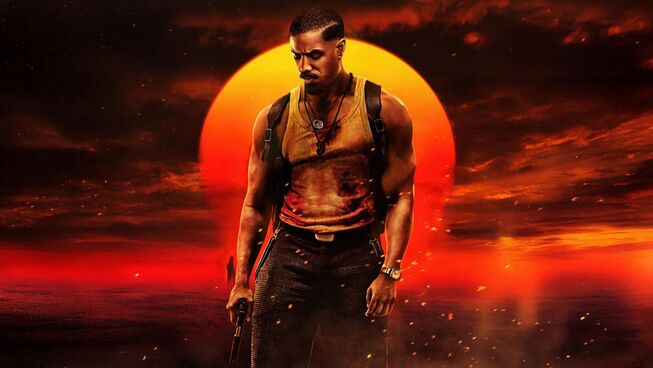
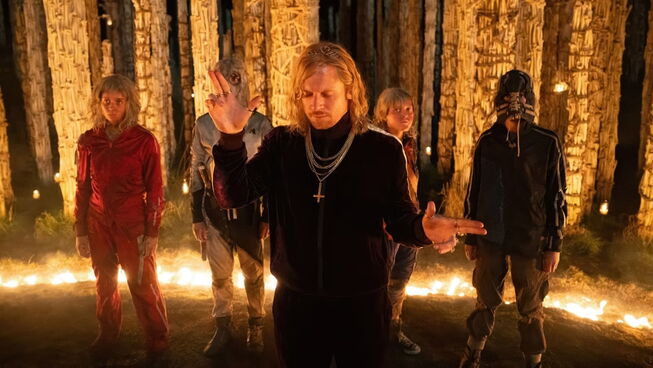
Set decades after the initial outbreak, 28 Years Later: The Bone Temple finds the world fractured into ideological enclaves as much as physical ruins. Picking up directly where 28 Years Later left off, young survivor Spike (Alfie Williams) is captured by the followers of Lord Jimmy (Jack O’Connell), a charismatic and utterly depraved cult leader who has built a Satanic community out of fear, ritualised violence, and false transcendence. Meanwhile, Dr Ian Kelson (Ralph Fiennes), an atheist humanist physician, operates in isolation, attempting the seemingly impossible: curing Samson (Chi Lewis-Parry), an infected “alpha” whose retained intelligence suggests redemption might not be entirely impossible. The collision between these two visions of humanity: one built on domination and worship of death, the other on dignity and remembrance leads to a final act that is as viscerally shocking as it is thematically rich.
DaCosta proves once again that she is one of the most interesting genre filmmakers working today. She balances the expected gore and brutality of the 28 … Later universe with an impressive technical command including claustrophobic camera work, punishing sound design, and stunning production design. But what elevates The Bone Temple is its willingness to ask uncomfortable questions about belief. In a world stripped of institutions, law, and shared morality, what fills the void? What do people turn to when hope feels extinct?
Jack O’Connell’s Lord Jimmy is genuinely terrifying not because he is cartoonishly evil, but because he understands the human hunger for holy devotion. His Satanic cult offers structure, ritual, and belonging, all built on lies and bloodshed. Worship here is distorted into performance and power. Jimmy doesn’t merely want obedience; he wants reverence. His acolytes reflect this, participating in acts of cruelty not out of survival but devotion. Spike’s captivity under this regime is harrowing, a reminder that the most damaging violence is often spiritual before it is physical.
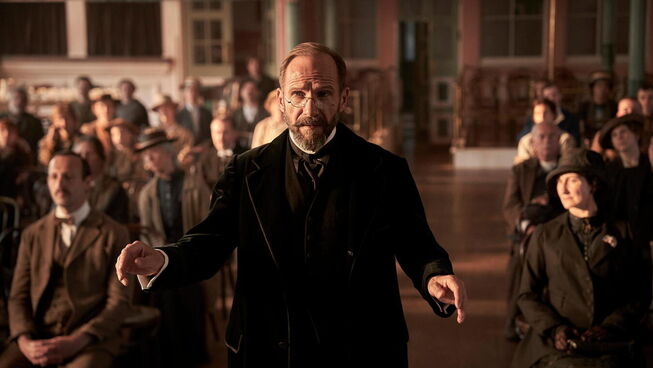
In contrast, Ralph Fiennes delivers a tenderly compelling performance as Dr Ian Kelson. An atheist humanist, Kelson is not a believer in God, but he is deeply committed to the value of human life. His reverence is directed not toward death itself, but toward the memory of those who have died. This distinction is crucial. His ossuary, a skeletal sanctuary constructed to house and honour the remains of the dead, is one of the film’s most striking elements. “This is a memorial to the dead,” he insists, pushing back against the cult’s interpretation of the space as a Satanic Bone Temple inhabited by Old Nick himself.
The final act is a viscerally engaging spectacle, confronting, chaotic, and surprisingly moving. It brings these threads together in a way that leaves audiences astounded. Horror rarely allows space for reflection, but DaCosta insists on it, even amid the bloodshed. And as the spin-off trilogy continues to unfold, there is great opportunity for further reflection amidst the zombie killing carnage.
Reel Dialogue and Third Space have entered the world of YouVersion: Download the app, dive into the plans, and engage with the Bible in a fresh and exciting way.

Reel Dialogue: Why do we worship what we worship?
From a Christian perspective, 28 Years Later: The Bone Temple is a striking meditation on Romans 1: that humanity inevitably worships something, and that distorted worship leads to distorted living. The cult’s theology is demonic not simply because it invokes Satan, but because it delights in pain and rejects the image of God in others. Kelson, though not a Christian, demonstrates a form of common grace as he honours life and death without exploiting either. Here, The Bone Temple becomes a fascinating exploration of worship. Satanic worship, as depicted through Jimmy, is ultimately self-worship masquerading as rebellion. It’s an inversion that dehumanises others for the sake of power. Kelson’s approach, while secular, echoes something profoundly biblical: the dignity of the body, the refusal to instrumentalise death, and the hope, however faint, that even the infected are not beyond redemption. His attempt to cure Samson is not naïve optimism; it is an act of defiance against a world that has accepted dehumanisation as inevitable.
28 Years Later: The Bone Temple points us beyond the viral infection responsibly for its post-apocalyptic dystopia, and towards the infection of sin that exists within the human heart and corrupts thought, word and deed. It points clearly to the need for divine intervention to save us from something we can’t save ourselves from. Jesus is that Saviour.